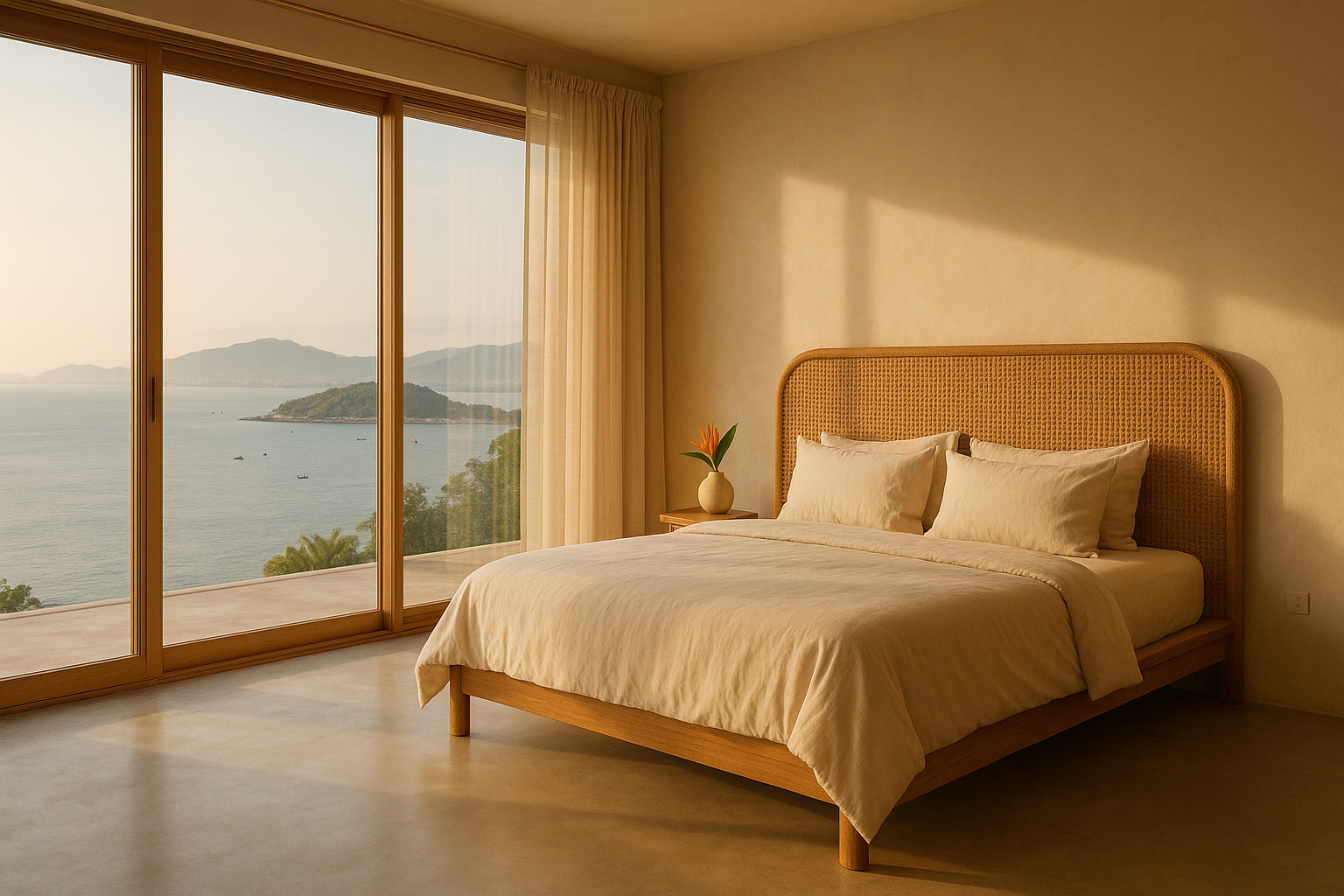
“We took the 9:30 ferry from Bạch Đằng. By 11:20 we were on the terrace with cold beer. Châu had left phở on the stove and the keys to a scooter on the kitchen counter.”
NH
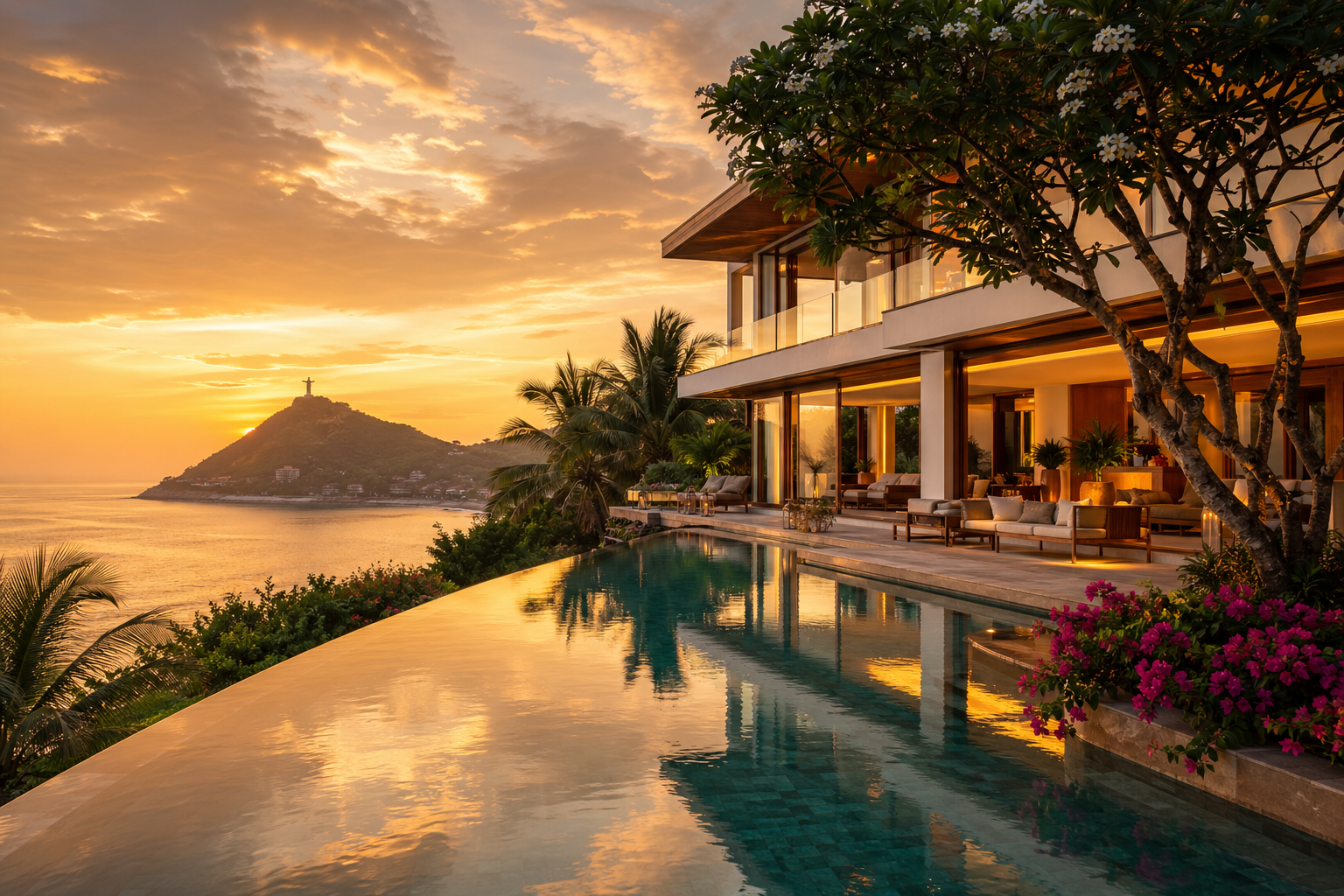
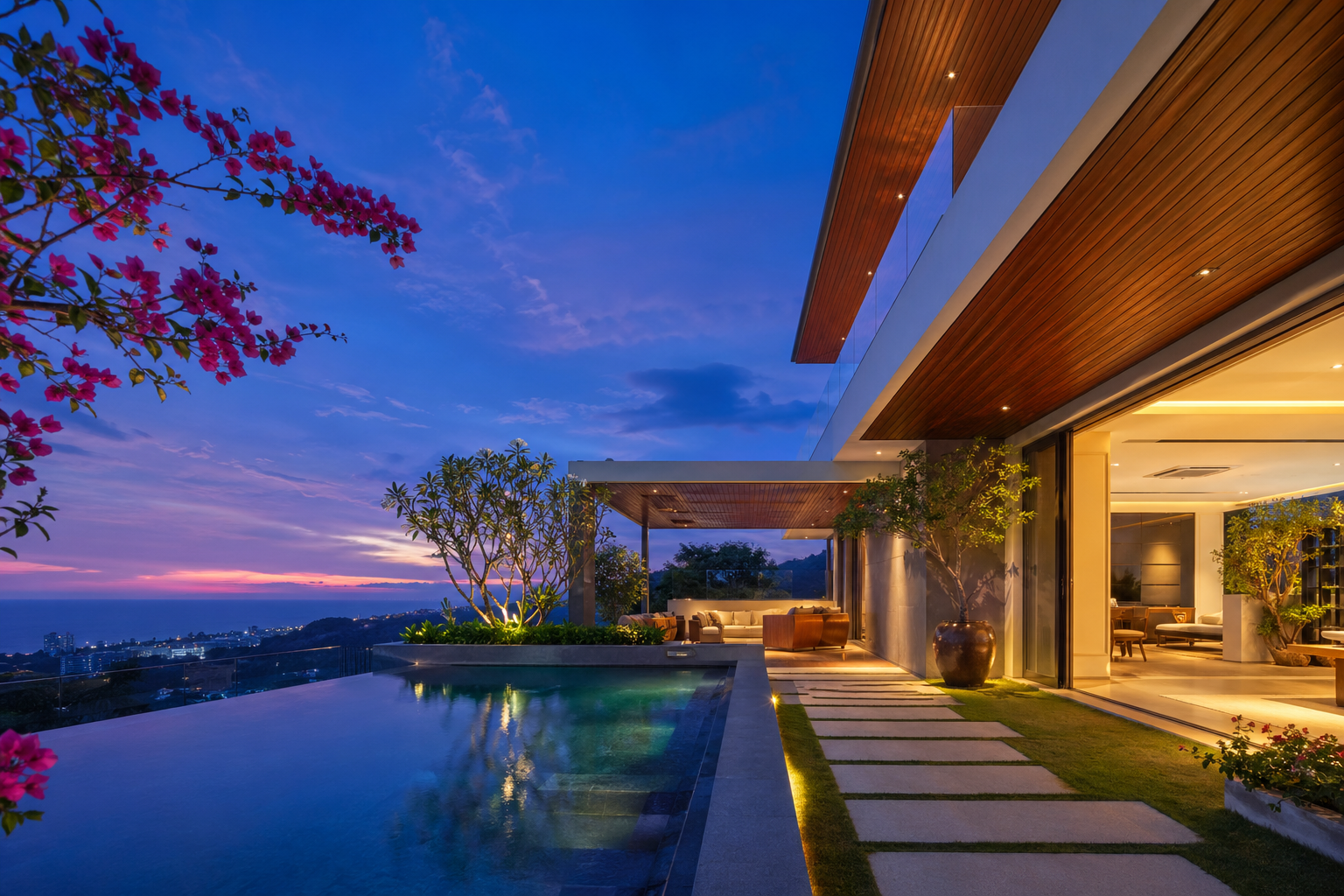
Six architect-built houses on the headlands of Vũng Tàu — once Cap Saint-Jacques, the seaside resort of French Indochina. 125 km south of Saigon by Highway 51, an hour and three-quarters by Greenlines DP from Bạch Đằng pier. Reserve the whole house, leave the city by lunch, eat bánh khọt by sundown.
 Cap Saint-Jacques · live
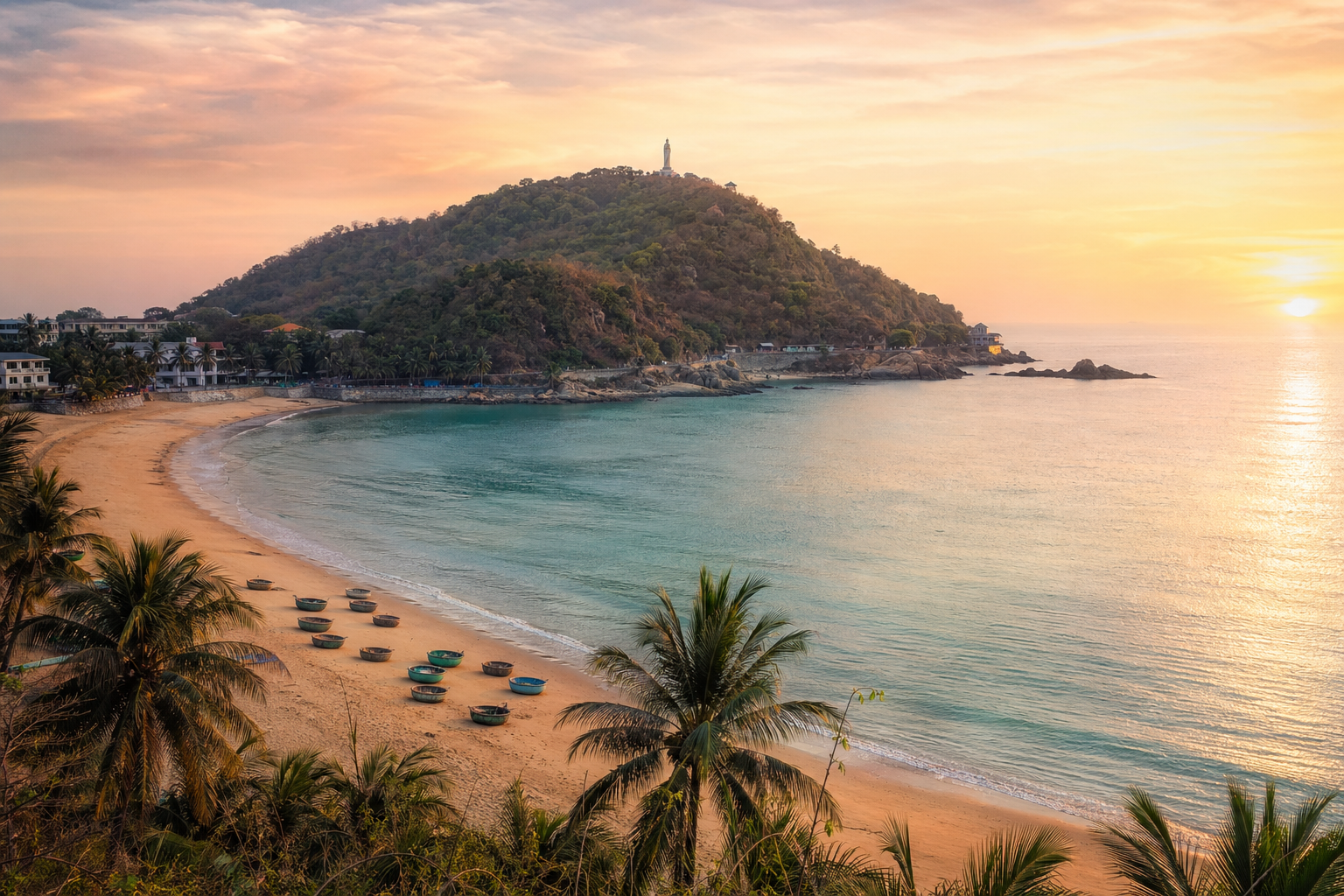
Vũng Tàu is a thumb of land that pushes south into the East Vietnam Sea, squeezed between Núi Lớn and Núi Nhỏ. The French called it Cap Saint-Jacques and built a governor's villa above Bãi Trước in 1898. The Vietnamese kept the lighthouse, traded the colonials for a quieter kind of weekend, and call it home. Three beaches: Bãi Trước for the evening promenade, Bãi Sau for the long swim, Bãi Dứa for the cove no one talks about. Our houses sit on the quieter sides.
EIGHT THINGS YOU DO ANYWAY
Compiled by the desk · 2026
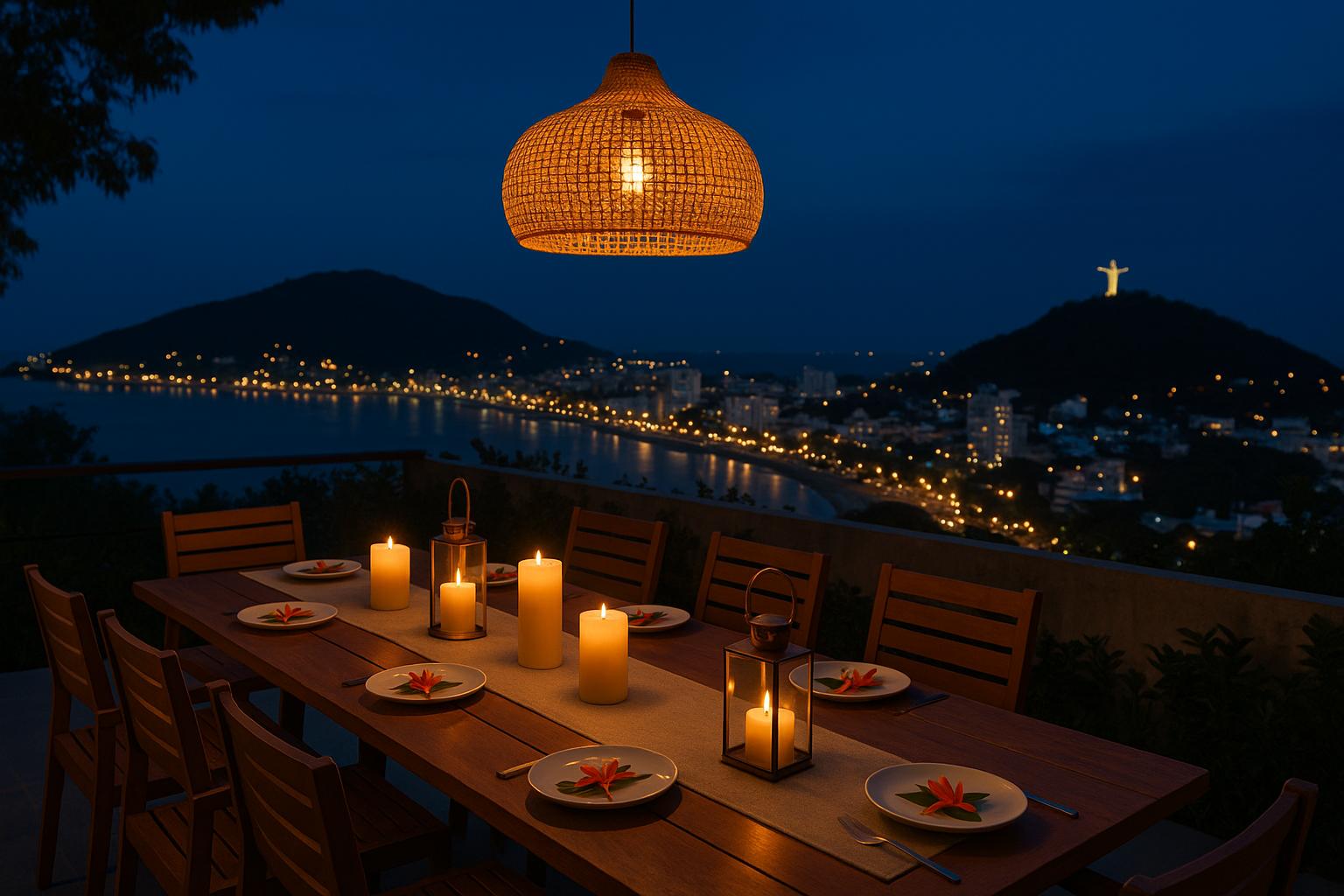
Thirty-two metres of reinforced concrete with arms outstretched towards the sea. Begun in 1974, finished in 1994. The largest Christ statue in Asia. Time the climb for the half-hour before sunset and bring more water than you think you need.
Built by the French in 1862, the oldest standing lighthouse in Vietnam. White, slim, eighteen metres tall, perched at 170 m above the sea. The walk up the Hải Đăng road is the postcard most people don't know to take.
Governor-General Paul Doumer's summer residence, built 1898–1902 in a neoclassical French style on the bones of an old Nguyễn-dynasty fortress. Now a small museum of porcelain salvaged from shipwrecks off the cape. 15,000 ₫ to enter.
A small cove on the seaward side of Núi Nhỏ — the calmest, clearest water in town and almost no one knows about it. Park on the road above, descend the stone steps, bring a snorkel for the rocks at the south end.
Vũng Tàu's signature dish: small crispy rice-flour and coconut-milk pancakes, fresh shrimp on top, wrapped in mustard leaf and dipped in sweet chilli fish sauce. Cô Ba at no. 1, Cây Sung at no. 19. Locals will fight you over which is best.
Where the night-boats land their catch at dawn. Blue crab, prawn the size of your hand, mantis shrimp, scallops still clenching. If you book a chef, this is where they'll be at six-thirty in the morning while you're still asleep.
Where the coast turns. Two beaches, jagged rocks, and the strongest sea wind on the cape — locals come at sunrise; very few foreigners do. Walk the path along the cliff for the view back across the bay.
When the city beaches feel busy, drive south. Long Hải gives you a long flat stretch backed by casuarina trees and quiet seafood shacks; Hồ Tràm, twenty-five minutes further, is twelve thousand hectares of nature reserve and almost no one.
VERIFIED · 318 STAYS
Updated April 2026
“We took the 9:30 ferry from Bạch Đằng. By 11:20 we were on the terrace with cold beer. Châu had left phở on the stove and the keys to a scooter on the kitchen counter.”
“The chef was at Bến Đá at six in the morning. By eight there was crab on the kitchen island and a bowl of mantis shrimp on ice. Twelve of us, one long table, the bay below. The easiest birthday we've ever thrown.”
“I came to write for ten days. The rocks below the cliff make a sound at high tide that I will be chasing for a long time. I never made it past the lighthouse on the third afternoon.”
“They moved my driver by 90 minutes the morning of and re-booked our seafood table at Gành Hào without me asking. The little things are what these people are good at.”
“Tây Sơn is a piece of Đà Nẵng architecture transplanted onto a cliff above Bãi Sau. Watching the November monsoon roll in over the South China Sea from that pool is something I think about often.”